Blog
Saturday, October 17, 2026 - 07:00

Lesbian Historic Motif Podcast - Episode 354 - Why is Intersexuality Relevant to the History of Lesbianism? - transcript
(Originally aired 2026/10/17)
Content Note
Let’s start with a content note. Historic discussions of intersexuality have a hard time avoiding the word “hermaphrodite,” which today is considered offensive when applied to intersex persons. However, in historic use, “hermaphrodite” was used in a variety of contexts to indicate combinations of masculine and feminine attributes and applied to the entire spectrum of sex, gender, and sexuality. This could include people with ambiguous genitalia, but also people who combined aspects of performative gender assigned to both men and women, or who performed gender attributes not matching their assigned sex. Pre-modern gender theory did not clearly distinguish these concepts. I acknowledge that the use of the word “hermaphrodite” in the context of intersexuality is considered offensive today and apologize for any harm that discussing the historic usage may cause for readers. As the historic use of the word applies to a semantic complex for which there is no neutral corresponding term today, it’s hard to avoid the word entirely.
As usual, I’ve focused this discussion on Western, largely Christian culture in keeping with the primary focus of the Project. As intersex is a natural, rather than a cultural, phenomenon, every culture can be expected to have some way of recognizing and addressing it. There is an extensive discussion of intersexuality in Xie’s dissertation on historic Chinese attitudes toward gender deviations. DeVun includes discussions of intersex within Jewish and Arabic traditions. As the topic is tangential to the focus of the Project, I haven’t specifically sought out work on other cultures.
Discussion
So why is intersexuality relevant to the history of lesbianism?
Within a cultural context where physiological sex, performative gender, and sexual preference are expected to march in parallel, any deviation from the expected alignment is a social disruption. People causing such disruptions have, at various times, been classified as “hermaphrodites” although different eras emphasized different aspects of the equation, and other labels are also possible. Interpretations of, and reactions to, such deviations will either stigmatize the individual (variously as sinful, monstrous, criminal, diseased, or some other framing) or will attempt to reanalyze the deviation to restore the expected alignment in a way that requires the least cognitive dissonance. For example, it might be argued that the sex assignment was incorrect, or that the gender performance was due to economic reasons.
If we take as a fixed frame of reference a situation that produces the appearance of same-sex desire between women, then we can explore how the society handles deviations of performative gender or physiological sex. Deviations of performative gender fall more under the topic of female masculinity and are out of scope for this episode. Deviations of physiological sex correspond loosely to intersexuality and raise questions of how sex is identified and categorized. Historic debates around the nature and sexual classification of intersex people can shed light on cultural understandings of “who is a woman?” and “what does it mean to be of the same sex?” as well as the question “who gets to decide?”
While modern classification as intersex can encompass issues of anatomy, chromosomes, hormones, and reproductive organs, prior to the 20th century (and the ability to identify chromosomal and hormonal factors), sex classification was focused on visible genitalia and secondary sex characteristics, with behavioral aspects brought in when those failed to provide a clear answer. More specialized considerations of internal anatomy began to be available around the 19th century. Most academic studies of the history of sex difference don’t address intersexuality in any meaningful way, lumping in anatomical ambiguity with behavioral gender transgression (such as cross-dressing or homosexuality) but we can trace historic attitudes toward intersexuality within those studies.
Common visible intersex conditions might manifest as a smaller than typical penis or an enlarged clitoris, or a combination of an apparent penis of some size with an apparent vaginal opening, though not necessarily large enough to enable penetrative sex, or some other variation. There is a much wider range of less visible intersex conditions, but these are less likely to have contributed to pre-20th century ideas about sex and gender. While estimates of the prevalence of intersex conditions vary widely, they are common enough to justify historic models of sex trying to account for the phenomenon.
The “one-sex” model of sexual difference, originating in classical times, allowed for a sliding scale of categorization, with male at one end, female at the other end, and various types of intermediate or ambiguous bodies and behaviors in between. Intermediate forms under this model of sexual differentiation were not identical to the classical idea of the “androgyne”—a perfect melding of male and female—but rather represented a failure to adhere to the ideals of purely male or purely female. Although the one-sex model wasn’t systematically displaced in medical theory until the early modern period, philosophical debates during the 12th century tackled the question of just how to draw dividing lines and whether “hermaphrodites” represented an intermediate state or an entirely separate “third sex.” To some extent, these debates, rather than undermining a gender binary, called for stricter gender boundaries (a situation that would recur in the 19th century). Regardless of the difficulty in classifying ambiguous bodies, it was considered essential to have a metric for doing so, as sex classification was the basis for social and legal identity.
Because of this surge of interest in “hermaphrodites” in the 12th century (which would wane in following centuries before reviving in the 16th century), we can examine a snapshot of the attitudes of various parts of medieval society. Medical writings tended to accept a three-sex model, including a “neither male nor female” category based on anatomy. Theological writings—concerned with the possibility of sodomy—declined to recognize a formal “third sex” and assigned a sexual category based on sexual response and capacity. Someone who was sexually “more active” could be classified as a man, or if “more passive,” as a woman. But if they “failed” at this classification they were not allowed to switch and must instead remain celibate.
While philosophy and medicine allowed space to debate the fuzziness of sex and gender categories, the law had no such luxury. It recognized only two sexes and enforced clear and drastic differences in what rights the two had. No one could escape the requirement to be legally classified as either male or female. Roman law—which continued to influence European legal systems throughout the middle ages—held that an intersex person would be classified according to the “preponderance of their traits” with a focus on anatomy, but it remained fairly silent on the question of who would make that classification. Various approaches were taken in various contexts to make this assignment, based on the appearance or functionality of the genitals, and sometimes taking into account behavioral gender factors, if anatomy provided no clear guide.
Assignment into a sex category could be particularly fraught if the question arose later in life. Some intersex conditions only become apparent at puberty, when a female-appearing body develops more masculine-appearing genitals, or when a body that appeared to be an under-developed male began to menstruate. Such cases are likely to have contributed to the belief prevalent in classical and medieval times that bodies could change physiological sex. In some cases, this was thought to be a random and spontaneous occurrence, but there was an associated belief that cross-gender behavior could result in a change of corresponding sex.
Classical and medieval authorities concurred that spontaneous change of sex was almost always from female to male, explained as nature moving from the imperfect (female) to the perfect (male). While behavior-mediated sex change could, in theory, occur in either direction, the vast majority of the examples cited in the literature are from female to male. Traces of a belief in behavior-driven sex change can be found as late as the 19th century when women were discouraged from participating in male-coded activities for fear it would affect their reproductive capacity.
While some such sex-change narratives may have been inventions, there are conditions that manifest as a child appearing to have anatomy associated with one sex, but on puberty developing sexual characteristics of a different sex. For example, the genetic condition 5α-Reductase 2 deficiency can result in a chromosomally XY infant being classified as female, but then developing more typically male genitals at puberty. As a recessive genetic trait, this condition might appear randomly in the population and could easily have been the inspiration for a belief in spontaneous female-to-male sex change.
In an environment where the idea of such changes was accepted, some people may have claimed to have undergone a sex change even when not supported by their anatomy, either to live as a man (gender identity) or to engage in socially acceptable relations with a woman (sexual preference). In 16th century Spain, Elena de Céspedes (after marrying a man and bearing a child) took on the name Eleno and began living as a man, including marrying a woman. When questions later arose about their identity, Eleno justified their actions by claiming to have developed male genitals that were later lost in an accident.
Official interest in cases of intersexuality focused around two concerns: reproduction and same-sex relations. From the medieval period up through the 20th century, investigations into proper sex categorization were often raised due to the perceived inability of one partner in a marriage to fulfill the expected sexual role of their assigned sex. (This concern could be driven by male impotence as well as by anatomical concerns.) The annulment of a marriage due to reproductive incapacity sometimes involved re-categorizing the person’s sex, but sometimes simply concluded that they couldn’t perform adequately according to their correctly-assigned sex, or that it was impossible to determine a correct sex classification.
A separate concern was that, due to mis-classification, someone was inadvertently engaging in same-sex acts. The flip side of this concern was that an incorrect re-classification of someone’s sex might result in same-sex acts. As a general rule, a person was only allowed one sex reclassification. Acting as the “wrong” sex was forgivable before the matter had been adjudicated, but a second reassignment meant the person had been knowingly and willfully acting as the “wrong” sex. If they had engaged in marriage or sexual relations in both sexual categories, that raised moral questions as well as legal ones.
A clear-cut case of intersexuality which raised both concerns was recorded in 17th century Virginia when Thomas or Thomasine Hall was challenged due to a history of having sexual relations with both men and women and having lived alternately as a woman and a man. A medical examination confirmed Hall’s claim to be both male and female, leaving the law befuddled as to how to classify them, though the record indicates that the concern was more about gender transgression than about which of Hall’s sexual activities was problematic.
Beginning around the 16th century, and especially within medical circles, another topic that brought lesbianism and intersexuality into overlap was the renewed fascination with the clitoris as a sexual organ and the association of clitoral enlargement with sex between women. (This is an entire topic on its own and there will be a podcast about it eventually.) Factual reports of intersex people who combined female-appearing genitals with a micro-penis are likely to have contributed to the idea of the “macro-clitoral lesbian,” but the latter image took on a life of its own. When reading reports and case histories from earlier eras, it isn’t always possible to determine whether the subject of the discussion is intersex, or whether the observer is ignorant of the range of anatomical variation, or whether non-normative behavior is being reinterpreted as non-normative anatomy. There are numerous cases of apparent female same-sex desire being a trigger for investigating one of the partners to see if they had masculine-appearing anatomy, as in the early 17th century case of Marie or Marin le Marcis who was acquitted from a charge of “female sodomy” by a doctor’s opinion that Marcis had sufficiently masculine anatomy to explain desire for a woman, but not sufficient to be legally classified as a man. (Marcis was then legally forbidden from having sexual relations with either sex, to avoid any possibility of same-sex relations.) One motivation for attributing (apparent) female same-sex desire to “hermaphroditic” anatomy, was the ability to reclassify such people as a type of “third sex,” thus excluding the possibility that “normal women” could have same-sex desires.
This approach faded with the rise of the “two sex model,” under which male and female were considered to be entirely separate states of being. The theory was that everyone clearly had an underlying “true sex” that must be determined, rather than allowing that someone might be intermediate between the sexes and assigned to a category based on a best fit, or to a third category entirely. Previously there was some latitude for considering a person’s social presentation or even personal preference. Some medieval jurisdictions allowed an intersex person to swear to which sex they would live as, rather than being assigned a sex by the authorities. But under the two sex model, medical expertise began to claim jurisdiction over questions of sex categorization.
Advances in the study of anatomy and improved understandings of the biology of reproduction in the later 18th and 19th centuries pared away some of the mythology around intersexuality, without disrupting the idea that everyone had an underlying “true sex” and that there was a physiological basis to gender identity. It continued to be the case that people who deviated from a normative alignment of sex, gender, and sexual preference were perceived as a problem to be solved, but the issue was interpreted in new ways. The “masturbation panic” of the 18th century introduced the idea that what appeared to be a penis-like clitoris could be caused by masturbation rather than being evidence of a male body. At the same time, the prior belief that a naturally-occurring enlarged clitoris (or micro-penis) indicated an intermediate or “third” sex was redirected toward a need to classify the body unambiguously as male or female. Even as medical publications spread awareness of the reality of intersex conditions, they were still treated as a problem to be solved.
The increasing medical acceptance of intersexuality was deployed to try to avoid recognizing same-sex desire. Witness the 18th century French case of Anne or Jean-Baptiste Grandjean who, after growing up unquestioned as female, was instructed by their confessor to live socially as a man due to having expressed sexual desire for women. Several years after marrying a woman, this transgender solution was rejected by a court who convicted Grandjean of “contempt for the sacrament of marriage.” On appeal, Grandjean’s lawyer used a claim that his client was intersex (a claim that had not been made in prior medical examinations) as a defense. The multiple medical examinations of Grandjean came to different conclusions, leaving the truth of the matter unclear, but the point was that a reassignment of sex category—or at least a legal recognition of ambiguity—would have been the only acceptable defense for the marriage.
In the 19th century, the French situation became more complicated because the Napoleonic law code required all infants to have their sex registered within three days of birth, but also made no allowance for any classification other than male or female. This made France central to medical debates over how to classify ambiguous bodies. Doctors developed elaborate and contradictory strategies for determining an official sex assignment, while the law courts had to deal with the consequences of initial sex assignment of infants that were later called into question.
Outside of France, references to a “third sex” could encompass intersex people as well as developing sexological theories around same-sex desire. By the 19th century, intersexuality was starting to go out of fashion as an assumed explanation for gender crossing. But once a person was identified as intersex, that fact might be applied retroactively as explanation for all manner of deviations from expected gendered behavior. The case studies offer a detailed catalog of the attributes and behaviors that were considered to be biologically tied to sex. Sexologists introduced the idea that this physiologically-based gender identity could be at odds with one’s apparent anatomy, which developed into the idea of “gender inversion,” while still assuming that gender identity drove sexual preference. Sexology set out to develop a scientific approach to questions of sex, gender, and sexuality but continued to treat the three as hopelessly intertwined.
Returning to the question of “how is intersexuality relevant to lesbianism,” we must consider the core historic prototype. Sex, gender, and sexual desire were expected to align in specific ways. For much of Western history, these three topics were not treated as distinct. Although we can find language discussing anatomical sex, behavioral gender, and sexual preference, they were not considered to be independent characteristics. Similarly, although historic cultures recognized and described deviations from the default alignment, those deviations were not “bundled” into the same identity categories that have developed across the 20th century. So, for example, the term “hermaphrodite” could refer to any misalignment. Where today’s approach might refer to a deviation of sexual preference as “homosexual,” a deviation of gender as “transgender,” and a deviation of sex as “intersex” (as a vast oversimplification), these were not necessarily meaningfully distinct categories prior to the turn of the 20th century.
The attribution of masculinity to women who desired women was the flip side of the authorities using desire for women as evidence for masculinity in intersex persons. The attitudes are thoroughly intertwined. When doctors and other professionals trying to assign sex to an ambiguous body prioritized avoiding the appearance of authorizing same-sex desire, we can see a reflection of how some unambiguously female bodies were assigned masculine gender in order to make sense of their desire for other female bodies. The people with those female bodies might embrace or reject that assignment of masculinity, but the pressure was there. Similarly, when behavioral attributes like “enjoying active sports” or “having a scientific mind” were considered diagnostic when evaluating cases of unclear sex, we can better understand why women in history might label themselves “masculine” for similar interests without necessarily experiencing what we would understand today as gender dysphoria. All of this complicates the historic analysis of same-sex and same-gender desire. Thus we can see that exploring the intersection of lesbianism and intersexuality helps in identifying the underlying cultural assumptions and models that shape both social attitudes towards lesbianism and the self-understanding that women may have had about their own identities and desires.
References
Brown, Kathleen. 1995. “’Changed...into the Fashion of a Man’: The Politics of Sexual Difference in a Seventeenth-Century Anglo-American Settlement” in Journal of the History of Sexuality 6:2 pp.171-193.
Burshatin, Israel. “Elena Alias Eleno: Genders, Sexualities, and ‘Race’ in the Mirror of Natural History in Sixteenth-Century Spain” in Ramet, Sabrina Petra (ed). 1996. Gender Reversals and Gender Cultures: Anthropological and Historical Perspectives. Routledge, London. ISBN 0-415-11483-7
DeVun, Leah. 2020. The Shape of Sex: Nonbinary Gender from Genesis to the Renaissance. Columbia University Press, New York. ISBN 978-0-2311-9551-5
Donoghue, Emma. 1993. “Imagined More than Women: Lesbians as Hermaphrodites” in Women’s History Review 2:2 199-216.
Laqueur, Thomas. 1990. Making Sex: Body and Gender from the Greeks to Freud. Harvard University Press, Cambridge. ISBN 0-674-54349-1
Linton, Anne E. 2022. Unmaking Sex: The Gender Outlaws of Nineteenth-Century France. Cambridge University Press, Cambridge. ISBN 978-1-316-51182-4
Manion, Jen. 2020. Female Husbands: A Trans History. Cambridge University Press, Cambridge. ISBN 978-1-108-48380-3
Nederman, Cary J. and Jacqui True. 1996. “The Third Sex: The Idea of the Hermaphrodite in Twelfth-Century Europe” in Journal of the History of Sexuality 6:4: 497-517.
Vermeil. 1765. Mémoire pour Anne Grandjean. Louis Cellot, Paris.
Xie, Wenjuan. 2015. (Trans)Culturally Transgendered: Reading Transgender Narratives in (Late) Imperial China. Dissertation.
Show Notes
In this episode we talk about:
- Historic understandings of intersexuality
- The intertwined models of sex, gender, and sexual preference
- How avoiding homosexuality drove approaches to intersex sex assignment
- This topic is discussed in one or more entries of the Lesbian Historic Motif Project here: Intersex
- A list of references can be found in the transcript
Links to the Lesbian Historic Motif Project Online
- Website: http://alpennia.com/lhmp
- Blog: http://alpennia.com/blog
- RSS: http://alpennia.com/blog/feed/
- Twitter: @LesbianMotif
- Discord: Contact Heather for an invitation to the Alpennia/LHMP Discord server
- The Lesbian Historic Motif Project Patreon
Links to Heather Online
- Website: http://alpennia.com
- Email: Heather Rose Jones
- Mastodon: @heatherrosejones@Wandering.Shop
- Bluesky: @heatherrosejones
- Facebook: Heather Rose Jones (author page)
Major category:
LHMP View comments (0)
Friday, October 16, 2026 - 15:00
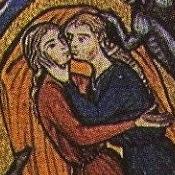
For years, as I've been reading historic research related to lesbianism, I've regularly come across topics and people where my first reaction is: "Why isn't the question of intersex being raised here?" A very few authors have integrated the topic into a general history of sexuality, but eventually I decided to pick up some more focused studies. Now I keep having to remind myself that intersexuality is tangential to my central topic and I shouldn't go haring off after biographies and whatnot. Tomorrow's podcast will integrate my thoughts on why I consider it interesting and important to discuss intersexuality in the context of lesbian history. And then maybe I can set the topic aside and return to my lane.
Major category:
LHMPFull citation:
Linton, Anne E. 2022. Unmaking Sex: The Gender Outlaws of Nineteenth-Century France. Cambridge University Press, Cambridge. ISBN 978-1-316-51182-4
Part I: A Cultural Prehistory of Intersex from the Archives; Chapter 1 Prescribed Fictions: Stories of “Hermaphrodisim” vs. “True Sex”
[Note: The author assumes a detailed knowledge of the central topic of the chapter, Herculine Barbin. To contextualize the material, here is some background, based largely on Wikipedia. Barbin was classified as female at birth and was educated at a convent school. There she fell in love with a fellow female student, then later with a fellow female teacher. Severe abdominal pain led her to a series of medical examinations, which identified anomalies in her anatomy.]
The literary style of the memoirs of Herculine Barbin is compared to fictional representations of hermaphrodites. Barbin offers what may be the only firsthand account from a 19th century intersex person. Indeed their memoirs were sometimes treated as fictional, plagiarized for other authors fictions, and appropriated for inclusion in medical reports.
This chapter looks at the purposes and conclusions of medical investigations of intersex people, and how those conclusions relate to the idea that all people have a “true sex.” Doctors came down on both sides of the question, as well as disagreeing about methods of sex determination.
Barbin was born in 1838 and recorded (as required by law) as female. In Barbin’s own writings both female and male gendered forms are used, predominantly female before the medical examinations that resulted in a change of legal sex, and mixed male and female afterward. This distinction is largely erased in English translations, and even the original French must be treated with caution as it survives only in excerpted form, as the original manuscript was lost.
Barbin’s legal sex change was done in 1860 (so when they were about 22). But having been required to change legal sex and start a new life, Barbin struggled to rebuild their life, fell into poverty, and committed suicide in 1868. All of which was recorded in their memoirs.
Barbin predicted that their death would renew medical interest in their case. The excerpted version of their memoirs was published in 1872 by Ambroise Tardieu as part of a study of sexual variation. A century later, Foucault would claim to “rediscover” the memoirs, and assert that they had not previously received much interest. (Not true.) Discussions of Barbin’s life generally pointed to their suicide as a consequence of their erroneous sex assignment at birth (rather than a consequence of the disruption of their life by the imposed sex reassignment in adulthood which Barbin alludes to).
Central to Barbin’s life was the importance of story to understanding and shaping identity. Barbin was well read, and one can’t find various literary influences in the memoirs.
The excerpts in Tardieu’s edition were edited and appropriated for an erotic novel L’hermaphrodite au couvent in 1905 written under a transparent pseudonym by a man who also wrote a medical study of hermaphrodism. The novel also draws on the tradition of convent-set erotica, offering sexual encounters that appear nowhere in the memoirs. Appended to the novel were various case studies, with the purpose of validating the believability of the events in the story. Both the novel and Tardieu’s commentary on the memoirs justify Barbin’s (or the fictional character’s) erotic desire for women as being due to an essential male nature.
Barbin had sought medical treatment due to abdominal pain, thought to be menstrual cramps, but the initial doctor, having observed Barbin’s ambiguous anatomy, made no direct diagnosis, only vague cautions about socializing with young girls. It was Tardieu who diagnosed the pain as due to “strangulation of the seminal gland” internally. Much of the anxiety expressed around “incorrect” sex assignment involved the possibility of a covertly male person having access to young women, with the assumed result of sexual activity.
Medical reports investigating cases of “doubtful sex” were often written in dramatic style: opening with a mystery, maintaining suspense, dropping hints, then finally offering a conclusion. The initial “mystery” could include failure to conform to gender stereotypes, as well as more concrete medical issues. The failure to perform perfect femininity was considered a symptom of inner maleness, and vice versa (although the former seems more common). The belief in this underlying “true sex,” combined with heteronormativity shaped pre-formed conclusions about the proper fate of intersex patients. It’s worth noting that Barbin’s memoirs came to no such conclusion about the underlying cause of their attraction to women.
One school of medical thought held that “true sex” depended entirely on the nature of the gonads present. Superficial anatomy, secondary sex characteristics, socialization, and self identity were irrelevant. In Foucault’s study of the subject he claims that, before this “true sex” approach in the 19th century, intersex people were free to choose their gender category—a claim that’s easily contradicted. Further, even once gonadal “true sex” became the dominant approach, doctors disagreed over individual cases, sometimes modifying their conclusions to achieve the happiest situation for the patient. An example is given of two different scholarly analysis of the same historic case. One held that the diagnosis supported a “gonad-based true sex” approach, while the other showed that the tests used by the doctors produced variable conclusions as to what that “true sex” was.
When standard approaches produced contradictions (or pointed to the necessity of recognizing same-sex desire) then literary techniques might be brought to bear to achieve the desired harmonious result. The desire for identifying a “true sex” and it’s intersection with sexuality contributed to the medicalization of sexuality in the 19th century. It was one more factor that must be brought into alignment to support a complete separation of sex categories.
Louise-Julie-Anna—a patient with conflicting attributes—was told that “her very existence was criminal.” This was based in part on a diagnosis of masculinity due to her failure to perform acceptable femaleness, despite having been categorized as female and living as a woman. Whereupon she sought a second opinion. The first doctor had diagnosed her as a deceptive man. The second doctor, noting both male and female anatomy, while concluding she was a man, noted the evidence for her female self-identification and used feminine language for her. He noted that she had had sexual relations with men (and only men) and exhibited feminine “modesty.” Thus both doctors brought heteronormative gender stereotypes to bear on the question, with opposing conclusions, despite agreeing on the question of gonadal sex.
The original trigger for her examination was a combination of excess facial hair, an organ intermediate in size between a clitoris and penis, and a hernia resulting in a strangulated organ, identified by the original two doctors as an undescended testicle. The pain from this condition had not been addressed by the initial examinations, but she convinced a third doctor to surgically remove the organ, at which point it was declared to be an ovary, not a testicle, though the surgeon later walked this back. In the meantime, the patient reframed her story to seek support for removing the corresponding organ. This evidently raised some concerns as castration was illegal (presumably removing the strangulated organ was a special case), whereas presumably removing an ovary raised no similar concerns. (It isn’t clear from the text what the eventual outcome was.)
Medical debates over “true sex” also addressed the question of whether a “true hermaphrodite”—that is, a person with both functional ovaries and functional testes—was possible. The debate was largely conducted on the basis of theory and of supporting the integrity of previous diagnoses. (There’s an extensive discussion of the details of this debate.) The debate also challenged the French legal requirement for sex categorization within three days of birth, noting that diagnostic features such as menstruation and secondary sex characteristics might not be apparent until puberty.
(There is an extensive discussion of the timeline for theories about “true sex” versus “two hermaphroditism.” The two approaches are found to coexist throughout most of the 19th century.)
Time period:
Place:
Thursday, October 15, 2026 - 12:00
This book and the previous one I blogged could hardly be more different in approach, given that they both revolve generally around intersexuality. While DeVun focused on philosophy and symbolism in medieval Europe generally, while also addressing the practical consequences for people with ambiguous bodies, Linton narrows in on the specific concerns of 19th century France and the interaction of medical and literary discources. I appreciated that Linton clearly addressed the question of why 19th century France was something of a special case. While much of the quoted textual material is a bit enraging for a modern progressive reader, it clearly demonstrates how thoroughly entangled the topics of sex, gender, and sexuality were in people's minds in that era.
Major category:
LHMPFull citation:
Linton, Anne E. 2022. Unmaking Sex: The Gender Outlaws of Nineteenth-Century France. Cambridge University Press, Cambridge. ISBN 978-1-316-51182-4
Introduction
The introduction opens, as is often the case, with a case history illustrating the main theme of the book. A patient was referred to a doctor for “suffering in the genital parts” and on examination the doctor could make no solid conclusion about what sex the person was. Not only did the person have ambiguous genitals, but they performed socially alternately as a woman (at home) and a man (outside the home).
Several factors brought intersexuality into focus in 19th century France—a focus that manifested both in literature and medical records. France seems to have been a particular flashpoint for this topic and the present book explores why that was the case, as well as making connections between the literary and medical traditions. In contradiction to some theorist’s positions that the idea of everyone having a “true sex” was solidly established by the 19th century, this study finds that both literature and medicine served to undermine this position, concluding that sex could, in many cases, be unknowable.
The topic of 19th century interest does not correspond exactly to the modern category of intersexuality, not only because many conditions classified that way today were not identifiable by 19th century medicine, but also because the historic category of “hermaphrodite” encompass social and behavioral elements as well as physiology. The 19th century position (inherited from earlier eras) was that sex, gender, and sexuality were expected to align, therefore any contradiction or ambiguity within those categories could result in a diagnosis of hermaphrodism.
There is a survey of 19th century French literature that features either characters described as hermaphrodites, or whose indeterminant gender is a key plot point. The exploration of indeterminant gender in fiction was echoed by the language in medical case studies that debated (with no consensus) how to properly assign sex in ambiguous cases.
Fiction was not the only venue for spreading popular awareness of intersexuality. Divorce cases in which it featured were publicized in the papers, intersex people were exhibited in medical schools and “freak shows.” New medical specialties competed for authority over the phenomenon. Although traces of the mythological bi-functional hermaphrodite remained in literature, often as a romanticized and idealized figure, increasingly the depictions were realistic, appearing in decadent literature—though combinations of the two motifs also occurred.
The book begins by examining the historic reasons behind the explosion of interest in 19th century France. This includes medical discussions around sex categorization and the consequences of indeterminacy, especially as they played out in the court. Literary narratives intersect with science in how these cases are argued, which leads to the book’s study of the motif in literature.
Another aspect of this specific moment in intersex history was the spread of accessible literature on the topic that intersex people could use to interrogate their own lives and bodies. In the case of Marie B., who raised questions about herself in the context of a marriage proposal, her own studies of literature on hermaphroditism led her to a contradictory opinion from the doctors—they concluded she was a man, whereas she had confirmed to her own satisfaction that she was a woman.
The introduction goes on to discuss the data and methodology.
Why were hermaphrodites so prevalent in 19th century French fiction and medicine? The rise of large public hospitals serving the poor, an interest in treating venereal diseases (involving examination of the genitals), and expansion of medical publications—all increased visibility. French law (as a legacy of the Napoleonic code) required doctors to record the sex of each birth within three days, with no allowance for ambiguity. Urbanization, shifting family dynamics, and a decreased birth rate raised interest and anxiety around reproductive topics. There was a conflict between sociopolitical efforts to “naturalize” gender difference, while at the same time doctors were identifying cases that undermined the concept.
Time period:
Place:
Wednesday, October 14, 2026 - 10:00
I could have sworn I'd finished posting all the chapters of DeVun, but I went to start the next book and found this one still in queue. I have my second book on intersexuality all written up and will start posting it tomorrow. And the related podcast will come out this weekend.
Major category:
LHMPFull citation:
DeVun, Leah. 2020. The Shape of Sex: Nonbinary Gender from Genesis to the Renaissance. Columbia University Press, New York. ISBN 978-0-2311-9551-5
Chapter 6: The Jesus Hermaphrodite—Alchemy in the Late Middle Ages and Early Renaissance
This chapter explores the use of hermaphroditic symbolism (mostly in the mythic “half-and-half” version) in alchemy and in religious symbolism around the figures of Christ and of Adam and Eve. The texts under consideration belong primarily to the 14th and 15th centuries. I’m going to skim this material a bit as it stands aside from the treatment of actual persons.
Alchemy dealt with transformations, both physical and spiritual, by manipulating competing binary properties (similar to humoral theory). This included assigning gendered properties to physical matter. One of the goals was to achieve a perfect balance and fusion of properties. Symbolically, this harkens back to theories of pre-lapsarian man as a non-binary (non-gendered) state, equivalent to the angels. This perfect non-binary substance was symbolized by Christ. Within this context (as opposed to when actual people were involved) non-binary sex he had an entirely positive connotation.
The book’s coverage ends before a major shift in interest about “hermaphrodites” “that included increasing hostility toward intersexuality in medical and legal discourse. [Note: one aspect of the shift was a rise in anxiety about various types of gender-crossing, such as clothing fashions. DeVun doesn’t get into this aspect.]
Conclusion: Tension and Tenses
There is a very short conclusion section that reiterates the book’s main themes and places them in the context of modern academic thought.
Time period:
Place:
Saturday, October 3, 2026 - 07:00
Lesbian Historic Motif Podcast - Episode 353 - On the Shelf for October 2026 - Transcript
(Originally aired 2026/10/03)
Welcome to On the Shelf for October 2026.
For those who have been following the saga of my broken wrist, I’ve been officially released from physical therapy. I still have some range-of-motion issues, but they’ll have to work themselves out through ordinary activity.
One new thing I’ve been doing this summer has been attending a lot of local book festivals and Pride events to sell my books as part of the Bay Area Queer Writers Association. It’s been an interesting and enjoyable experience to have so much interaction with potential readers (who don’t know me at all) and pitch our books to them. It seems like every community in the San Francisco Bay Area has its own local Pride Festival—fortunately they spread them out across the entire summer. It’s been fun to see the venues flooded with people of all ages, often whole families, enjoying being themselves in public. And, ideally, buying books!
Another thing I’ve spent the last few months on has been an essay on lesbian history that I donated to the Romancing the Vote auction, which raises money for voting rights organizations. The requested essay was a good excuse to work on a substantial chunk of the book version of the Project. A previous similar donation resulted in what will eventually be a booklet on How to Be a Lesbian in the English Regency. Originally, I was planning to include these setting-specific write-ups as part of the overall book, but when I started looking at word counts it made more sense to issue them separately. So it’s possible that I’ll begin publishing the side projects before the book itself is ready, which should help stir interest.
And, of course, this is your regular reminder that we’ll be running the podcast’s fiction series for the last time in 2027, with submissions accepted in January. See the link to the call for submissions in the show notes.
News of the Field
While I was putting together the new book listings this month, I ran into a relatively new publisher, Lavender Octavo, whose stated mission is, “reviving public domain works of interest to lesbian readers.” The website lists titles such as Pierre Louÿs’s Song of Bilitis, Rosamond Lehmann’s Dusty Answer, Mary Casal’s The Stone Wall, Renée Vivien’s translation of Sappho, and Adele Spitzeder’s The Story of My Life. Online listings of titles coming out next year include A. T. Fitzroy’s Despised and Rejected, Compton Mackenzie’s Extraordinary Women, and Ángeles Vicente’s Zezé. Original publication dates range from 1878 to 1928. Because these are all reprints and don’t exactly count as “historical fiction,” I’m not going to include them in the new book listings, but if you’re interested in early overtly lesbian books, I encourage you to check out the publisher. I’ve included a link in the show notes.
Publications on the Blog
Other projects elbowed some of my reading time out of the way, so the only new publication I’ve blogged is Leah DeVun’s The Shape of Sex: Nonbinary Gender from Genesis to the Renaissance. The study covers a variety of topics falling under the rubric of “non-binary” including mythological motifs, intersexuality, alchemical symbolism, and religious theory. I’ll be doing a podcast in the near future talking about why the history of intersexuality is relevant to the history of lesbianism. There’s at least one more book I want to read before I work on that topic.
Recent Lesbian/Sapphic Historical Fiction
When it comes to new fiction, we once again have a superfluity. So once again I’ll be condensing the cover copy in most cases, rather than reading the sometimes lengthy originals. (When cover copy was limited by needing to fit on an actual book cover, I think we didn’t get quite such lengthy essays. I have opinions on this topic, but I’ll save them for now.)
I want to reiterate my policies for these listings. I will not knowingly promote a book written using large language models. I have a set of criteria I use for evaluating books, but I can’t guarantee that my criteria won’t throw off false positives or false negatives. I used to include non-English books when I found them, but I’ve had to stop doing that because too many are AI translations and I don’t have the expertise to distinguish them. If I include a book that appears to use an AI cover, I will mention that, but in general AI covers are a strong predictor of AI content, so I give them extra scrutiny.
As usual this months books have a strong emphasis on the 19th and 20th centuries. Out of the 27 titles in the main group, only 4 are set before 1800, although all three titles in the “other books of interest section” are.
August books start with The Price of Treason by Corinne Astier.
In the blood-stained heart of 1793 Paris, Yvette Bardin operates 'The Silk Road,' a covert network smuggling innocents past the reach of the guillotine. Her dangerous double life as a seamstress and resistance leader is shattered when she is summoned to the Conciergerie—not by a common guard, but by Catherine Lambert, the revolutionary prosecutor and the woman who once held Yvette’s heart.
As you might guess, there’s going to be a bit of enemies and lovers action going on.
A continuing Western saga appears in Staying Above the Snakes (Wild Hearts on the Western Frontier #2) by Carmilla Deane from Lewis and Young Publishing.
The Two of Hearts ranch was supposed to be a fresh start for Harriet Jane Grant and her partner Grace—40 head of breeding stock, eighteen calves, a new corral, and a promise that Harriet’s bounty hunting is behind them. By September 1875, Harriet has buried her bounty hunter’s days beneath a rancher’s promise. Then a wealthy railroad man arrives with two thousand dollars and a story about a missing daughter. The money could stock the north pasture before winter kills the grass. But the truth Harriet finds in the Cache la Poudre Canyon isn’t the one she was paid to discover, and the journey home will force her to break every vow she made—or stand her ground and fight for what she’s built.
Flora: My Heart Will Pay the Price (Motherline Saga #2) by Amber L. Ricketts appears to be the only sapphic story in this series.
In 1919, on an orchard in Massachusetts, Flora is getting married in three weeks. Her mother, Beira O'Shea, has arranged a good match. But while visiting a friend in Boston, Flora stumbles into The Achillean, an old vaudeville theatre where the owner and cast live strange, secretive lives. Especially one performer: the mysterious Dani. Captivated, Flora stays in the city under false pretenses and tries to join the underground troupe.
While Flora explores the excitement and dangers of the big city, old secrets are being unearthed back home.
A Divine Comeback by David Imper from East 52nd Street is real-person fiction exploring an imagined encounter.
Greta Garbo. Marilyn Monroe. Two legends the world believes it already knows the ending to. New York, 1966 proves otherwise.
Struggling playwright Simon Goldberg only wants one thing: to get his play about Sarah Bernhardt and Eleonora Duse onto a Broadway stage. He never expects his search for a leading lady to lead him straight to Greta Garbo herself—or that a chance encounter will pull Marilyn Monroe into the same secret production.
Behind locked doors and hidden entrances, two of the most famous women in the world rehearse for the comeback of the decade. As opening night draws closer, secrets strain, hearts open, and the cost of being seen again becomes impossible to ignore.
September books start off with a pair of Regency novels by Verity Fairbanks from Inked Pages, following up on a previous release in the same series. It looks like the books all stand alone. The first is A Companion for Miss Ledbury (Fallowmere Novels #2).
Miss Honora Ledbury just has to survive her uncle’s Christmas house party for twelve days until her thirtieth birthday unlocks her inheritance. Her uncle has other plans, like marrying her to his son to cover up the fact that he’s spent the money to keep his glove-making business afloat. To escape those plans, Honora needs a lady companion at her side—so she hires one.
Miss Clemency Vane has been paid to be kind to difficult old women for seven years, and has just lost her last position without a reference. She plays whist as though she can hear the cards and sings the part in the carol nobody listens to. And she knows that Honora’s plans will cost the livelihood of the women in the glove-making factory.
Neither woman is wrong. That is the whole trouble.
The next book in this series is A Fortune for Miss Pomfret (Fallowmere Novels #3).
Worcestershire, September 1818. Miss Lavinia Pomfret is twenty-three, the cleverest person in her father's house, and the only one who reads the post. She has just discovered that her grandfather's marriage settlement left her ten thousand pounds — payable since her twenty-first birthday, and never once mentioned. Her father has spent every shilling of his income on foxhounds. A perfectly kind widower wants to marry her for the covert at the bottom of the garden. And the deed does not need her father's leave. It needs her trustee's. But the original trustee is dead with the trust passed to his daughter, and she has other concerns that Lavinia’s bequest would ruin.
Finding Each Other by Faithe Stephens from Henry Lyon Books explores a cross-cultural romance in the American western expansion.
Upper Michigan, 1820. Jessie has spent years building a life that asks little of anyone but herself. Deep in the wilderness, she has found solitude, competence, and something close to peace—if not quite the healing she once hoped would come.
Then she finds Waaseyaa. Injured, half-frozen, and far from home, the Ojibwe woman should be only another problem to solve. Jessie knows how to set a broken bone, tend a wound, keep a fire burning, and survive a northern winter. What she doesn’t know is what to do with the woman recovering beside her—or with the quiet friendship taking root between them.
A different type of cross-cultural romance is set during the American Civil War in Finding Freedom by Maggi Petton from Mercury HeartLink.
An unlikely trio is inexplicably united during the Civil War. Noni, strong, resilient and wise, endures the hardships of being ripped from her African home and living an unimaginable life of slavery in the American South. She can take anything—except the sale of her daughter, Efuru. Deep in a North Carolina forest, Noni and Efuru encounter Abby, a northern, white girl who has just escaped her kidnapper, a desperate AWOL Confederate soldier. This is their story of survival and forgiveness.
In What a Lady Wants by Viola Velarossi two women are challenged to choose to want something for themselves.
London, 1891. Beatrice Vale knows how to make a woman want something. She has spent seven years writing advertisements that other people praise her husband for. When Arthur claims her bold new catalogue as his own, Beatrice is expected to help quietly. Then Eleanor Shaw arrives to illustrate it: an independent artist with ink-stained hands, unpaid bills, and an inconvenient habit of asking Beatrice what she actually wants.
Working together brings small rebellions. A colour chosen for pleasure. A fee requested without apology. A kiss that makes returning home feel impossible. But Eleanor has already loved a married woman who wanted freedom only for an afternoon. She will not become another secret. And for Beatrice, leaving Arthur means more than walking out of a comfortable house.
Hidden Hearts (Fugitive Hearts #1) by Margaret Fridley is the start of a series set in the 1930s. The cover appears to be generated by AI but I see no suggestions that the content is.
Geraldine Grouder has spent five years making herself small inside a marriage that punishes her when she isn't. She times her market trips to the minute. She moves through the social halls of Calhoun counting Walter's tie-checks, reading his moods before they arrive. She has learned to perform adequate wife so precisely she has nearly forgotten there is anything underneath the performance.
Then a new schoolteacher walks through the doors of First Baptist Church on a Sunday in October — chalk dust on her sleeve, a leather satchel full of books, gray-blue eyes that find Geraldine across a crowded room and stop.
Mozella Pharras is everything Geraldine has been taught not to want: unmarried, educated, reckless with the truth. But she came to Calhoun on purpose. And falling in love was never part of the plan.
It’s quite understandable that the Russian female pilots known as the “night witches” carry a deep fascination for WWII novels, as in The Corrected Heading by William Ferrier Jr.
Zoya Belova has one gift the war cannot take from her: she can always find her way home.
In June 1942, she arrives at an airfield on the Volga steppe to join something the Soviet Union will spend decades trying to forget it built: a bomber regiment flown entirely by women. Paired with Vera Koloskova, a reckless, magnetic pilot who ties the same red scarf at her throat before every sortie, Zoya survives the only way she knows how, by counting. Fuel loads. Compass headings. Seconds between engine cut and bomb release. The number of times a searchlight can be outrun.
For three years they fly plywood biplanes over the German lines by night, becoming the regiment the enemy will come to fear and name. What Zoya cannot calculate is Vera, or the quiet, dangerous thing growing between them, or the paperwork moving through Moscow that could erase the regiment, and everyone in it, from the record before the war even ends.
On the other side of the Atlantic, the war-driven entrance of women into the industrial workforce is another favorite subject, as in The Riveter's Heart by Koda James.
Manhattan, 1944: Amidst the roar of a war factory, Vivan Arthur, a former army nurse, welds together more than just machinery. She’s meticulously rebuilding her own shattered peace, piece by painful piece. Her guarded heart, scarred by the battlefield, is a fortress no one can breach – until Elias Thorne, with an easy smile and an unsettling depth, sees past Vivan’s formidable defenses.
That’s a lot of books but we’ve only just gotten to the October titles, starting with The Stolen Women by Alysandra Dutton from Park Row, set in the classical world.
Safinia is fine to focus on her training as a warrior, providing for her sisters, and minding her own business. She feels no great need to meddle in anyone else's, until women in her town, including her former lover, begin disappearing. Quietly, at first, but disappearing just the same. All of the missing women have vanished from powerful households, but their formidable fathers are in utter denial, claiming their daughters are off on trips, sure to be back shortly, with perfectly reasonable explanations for their absences. Dissatisfied with the half-hearted attempts to hand wave away the alarming and mysterious cases of the vanishing women, Safinia takes matters into her own hands.
Of Her Blood by Rozina Hyland takes on cross-class romance.
Tilda knows her place: silent, obedient, unseen. In seventeenth-century Norfolk, England, where the nobility and Church rule with an iron fist, submission is survival, especially for a maid whispered to have witchcraft in her veins. Shunned by the staff and controlled by her masters, life consists of little more than making it through each day—until she discovers a connection with Imogen, the lord's daughter.
But as buried secrets surrounding her mother's execution for witchcraft begin to surface, and her bond with Imogen grows into something more, Tilda is forced to question everything she thought she knew. Why was she brought to serve this family, and what do her masters and the staff know about her past that she does not?
Beau Scamp by C. M. Harris from Last Laugh looks to be an enjoyable romp.
England, 1794: What a time to be alive!
Charlotte Goddard has spent her life performing. First, as Charlie, the stable hand raised in breeches by her highwayman father, and then as Beau Scamp, the notorious road thief whose reputation does considerably more work than her actual skills.
When a botched robbery brings her face to face with Lady Catherina Pemberton—the childhood friend Charlotte has loved since she was twelve—she finds herself talked out of fleeing to America to avenge her father’s death and instead talked into the most ill-advised disguise of her career: maid to the woman she’s desperately in love with, in the house she’s been robbing, and under the noses of everyone who wants her hanged.
Yet another author succumbs to the lure of following up on Jane Austen’s characters in Kitty (The Bennet Sisters #1) by T.J. Ryan.
After the death of Mr. Bennet, Kitty Bennet must leave Longbourn when her home passes to the relentless Mr. Collins. With her sisters married and the world she knew slipping away, she takes up residence at Pemberley as governess and companion to Elizabeth and Darcy’s children.
Amid the grandeur and quiet of Pemberley, Kitty discovers a life far beyond the frivolity of her youth. She secretly pursues her passion for writing, and in the process, forms a tender, unexpected bond with Georgiana Darcy — a connection that challenges society’s expectations and awakens a love she never anticipated.
We swing back to witchcraft and suspense in Raven by Lyndsay Faye from The Mysterious Press.
Raven Helen Allan has always been haunted by witchcraft. Since the death of her beloved mother, she has soothed herself by speaking words into spells—a proclivity enhanced by time spent with her aunt’s library of occult books. But when the household is threatened with financial ruin, Raven must set out to earn her own living.
Taking a job as a paid companion, Raven arrives at the crumbling Moldavia Manor. Her charge is a delicate young invalid named Lenore Legrand who haunts the Gothic structure like a phantom. Living with them is Lenore’s devoted older cousin Travanion, who shares Raven’s interest in the occult and devotes his days to searching ancient texts for an Elixir of Life that might cure his cousin. Raven finds herself inexorably drawn to both cousins as well as to the secrets hidden in the shadows of Moldavia Manor.
And now we’re back to the wild west in Where Ashes Bury Her (The Women of Sapphire #1) by L. Creeke.
Sawyer Hayes and Charlotte Windsor fought like hell for the chance to choose each other. As they leave West Wind behind and make their way toward Sapphire, they’re carrying more than they packed into their saddlebags. Lottie is determined to reclaim every piece of herself that was taken from her, refusing to bow her head for anyone ever again. Sawyer would burn the whole damn world before letting someone hurt the woman she loves, but she’s beginning to learn that protecting Lottie doesn’t always mean standing between her and the danger. Sometimes, it means trusting her to face it.
I’m beginning to think that I should have organized this months books by genre rather than setting, for we’re back to the occult in Rottenheart by Kat Dunn from Zando, which sets up a gender-flipped Hamlet.
1898 Hampstead, London: Odette’s mother is dead. Before the funeral rites have concluded, body not yet buried, her once-estranged aunt, Claudine, takes over as the family’s matriarch. Not long after, she is announced as Odette’s new step-mother and the household reorders itself around Claudine's every command. As Odette reckons with this betrayal, a sinister presence begins to make itself known—and it is desperate for revenge.
Odette’s childhood best friend and lover Cecilia is caught in the middle. As Cecilia’s affections are tested in the face of Odette’s spiraling madness, so too is her duty to her family when they find themselves bound to Claudine by a buried secret.
My Darling Girls by Marina Scott from Lake Union Publishing features an unusual profession.
In 1904 Chicago, where secrets cling as thickly as the soot on every windowsill, Jo earns her living by photographing the dead. The work is quiet and cloistered, allowing her to hide from a past that haunts her: the grief over her husband’s mysterious death, a spiraling addiction, and the guilt she carries over the things she’s done to survive.
When a notorious crime family hires Jo to make a final portrait of their daughter Millie, it stirs up a spirit that refuses to rest. In opium-fueled dreams, Millie lures Jo into a realm called “the courtyard,” where the dead burn to tell her their half-finished stories.
As Jo investigates Millie’s murder, she forms a fragile bond with her sister, Grace, who’s desperate for an escape of her own. Amid the whispers of the dead is a truth Jo must confront if she is to free them all from the shadows of the past.
The Translator by Annabelle Marx from Storm Publishing starts during WWI in Malta.
Two women escape military duties and discipline: swimming in secret coves, in basement bars of Valletta, they forge a bond that will shape the rest of their lives. After the war they take separate paths, bound by letters that slip gradually from mischief to darkness. Then, after two years of silence, Edie receives a parcel from Paris–three detective novels, all in French, no sender, no note–and her world shifts on its axis.
Her dearest friend, Vee Saunders is presumed dead, her body never found. As politicians murmur condolences to Vee’s powerful husband, Edie sits with a fury she can barely contain. She knows things about this marriage no one in the room would dare speak aloud. And she refuses to believe that Vee is gone. She closes her eyes and she’s back in the warm Mediterranean water – the salt on her skin, Vee’s hands keeping her afloat, that voice in her ear: don’t worry, I won’t let you sink… And Edie works to translate the novels.
Inspired by the origins of Daphne du Maurier's Rebecca, Unspeakable Things by Elizabeth Hand from Little, Brown and Company is a historical thriller.
It's the 1920s and the English countryside is quiet—which suits Olivia and Tamsin, two young women happy to be overlooked by society. Their relationship is complicated: unruly, working-class Tamsin was brought to Kerrith Manor to be tutored at Olivia's side, but the two quickly have found something more than friendship—a bone-deep recognition that ignites an endless passion.
But an unexplained death and an unexpected visitor soon disrupt their idyll, sending both women on the run. They find harbor at Ledges, the dazzling estate of ruthlessly wealthy and endlessly mysterious Rex D’Hiver. At Ledges, a favorite hang-out for the wealthy, bohemian Bright Young Things eager to cut loose far from London’s prying eyes, Olivia and Tamsin at last experience the heady power of true freedom…and soon, its deadly cost.
In one of those coincidences of publishing, The Housekeeper by Rose Tremain from Harper is also inspired by Rebecca, a little more closely than the preceding.
Mrs. Danowski is hired as housekeeper at Manderville Hall, Lord Grenville-Whithers’ mansion on the wild coast of Cornwall. A loyal and lonely woman troubled by childhood memories of alienation, Danni dreams of finding love. Those dreams are fulfilled when Daphne du Maurier arrives at Manderville Hall for lunch with Grenville-Whithers. Succumbing to her secret sexual desire for women, Daphne begins a love affair with Danni, meeting on the housekeeper’s days off in the secluded boathouse at Manderville Cove. For both women, this forbidden passion is both beautiful and terrifying. But of course such a love cannot last—and both Danni and Daphne must deal with the aftermath of their passion. While Danni struggles to find a new place in the world, Daphne reconfigures the experience into her most famous work, Rebecca, with surprising results.
Venus, Vanishing by Rebecca Birrell from Henry Holt & Company is set in the heyday of Berlin between the wars.
Hannah Sherman has deviated from the traditional narrative arc of a woman’s life. After rejecting an arranged marriage, she leaves home to join the city’s underground art scene, reveling in its clubs and galleries with newfound friends and lovers. Working as a tailor while studying art in every spare moment, Hannah comes to know women and their bodies, first with measuring tape and silk, and later through sensuous layers of paint.
Hannah feels like she can finally call herself an artist when a wealthy female art collector, commissions her to make an elaborate series of nude portraits. But after Hannah finishes the acclaimed Venus paintings, she discovers that her work is being tampered with and exhibited under a man’s name. When lines between artist and muse are crossed in an intoxicating but perilous affair, Hannah transforms her art into an act of revenge, finding herself caught up in a devastating game of survival.
Espionage and adventure lead the way in Angel on Fire by Annette Pritchard.
With a traitor in her department and an agent already dead, enigmatic Intelligence Chief Dr Isadora Kensington is a woman in trouble. Isolated and under fire, she’s about to put her faith in an untested rookie. Will the biggest gamble of her life pay off, or will it cost her everything?
American heiress Serafina de’Angelo is charming, wealthy, and desperate to escape an arranged marriage. Anxious to explore her hidden attraction to women, she jumps at the chance to cross the Atlantic to help a stranger. Serafina expected adventure, but Isadora’s world of seductive shadows demands far more. Falling in love was never part of the plan—but now she’s locked in the game of her life, and Isadora’s survival depends entirely on her.
I’ve gotten a little more picky about including “romance of the archives” stories that take place primarily in the present day, but I’ll make an exception for Upstate by Kim van Alkemade from William Morrow Paperbacks.
Thirty-four-year-old writer Audrey Beacon is grieving alone during lockdown when a post about a bookshop for sale in upstate New York pops into her social media feed like a lifeline. Enthralled by the historic house and the massive barn bursting with books, Audrey impulsively makes an offer. Soon, she’s cashing out her savings, loading her possessions into her dead husband’s van, and fleeing Manhattan for the village of Schuywich, determined to outrun the ghosts of her past.
In 1956, it’s love at first sight when Schuywich librarian Hazel McIntyre meets dashing magazine writer Evelyn Cabot at a summer camp in Maine that discreetly promises a “different vacation for professional women.” By summer’s end, Evelyn has left Greenwich Village to move into an old farmhouse she’s bought in Hazel’s hometown. In her new column, “The Upstate Dispatch,” Evelyn writes about her adventures renovating a house, tending to sheep, and opening a bookshop in her barn with help from the woman readers know only as her “roommate.” Privately, Hazel chronicles their six-decade love story in a series of letters that abruptly end when they’re forced to abandon the bookshop in 2015.
Past and present begin to converge when Audrey finds “The Upstate Dispatch” in a stack of old magazines, but it’s the discovery of Hazel’s letters that brings hidden love and long-buried family secrets to light.
Although I’m generally arranging these listings by the date of the setting, this next book sorted out at the end because I honestly have no idea when it’s supposed to take place. And, in any event, All's Fair in Love and Duty by Sarah Jacklin & Phoebe Rose from Launch Point Press is clearly taking place in an alternate version of whatever era it is.
Two best friends are after the same girl: one for love, the other for her family. Can their friendship survive this season of first loves and secrets? When her father’s finances fail, Eliza Ashworth is forced to find a wealthy match in this year’s crop of eligible singles. One star-eyed bachelorette recently bequeathed a sizeable fortune catches her eye. The only problem? Her best friend Charlotte is feeling butterflies for the same girl. Can their friendship survive this season of first loves and secrets? Or is all fair in love and duty?
Other Books of Interest
I put three books in the “other books of interest” section because although they’re tagged LGBTQ+ and turned up under my keyword searches, I can’t tell for certain from the cover copy what the sapphic content might be.
The Soldaderas by Sofia Guadarrama Collado tells the story of the first revolution in Mexico: the women's revolution.
Told in the voice of Cecilia who later became Adelita, the revolution began quietly in the mid-Porfiriato period, when women joined the workforce as office workers, telegraphists, journalists, newspaper editors, nurses, midwives, and doctors—something society frowned upon and considered idle, unnecessary, and dangerous, since for centuries women had been educated for marriage, motherhood, and housework.
It was the journalists and editors who organized and drove the beginning of the women's movements and made the first demands to the government about gender-based abuses throughout the country. And it was the soldaderas who consolidated the women's revolution and with their bravery demonstrated the strength of women, for without them, the Mexican Revolution would never have survived.
Death by Misadenture by Jane Bitomsky from Lake Union Publishing starts out as a cozy historical mystery. It sounds like the female character might be secondary to the male coroner. Hard to tell.
April 29, 1585. Coroner John Derrick is summoned to the village of Bramley to investigate a naked dead man found beneath a waterwheel. An unfortunate drowning, by all indications. But upon closer inspection, the case takes a macabre turn: The deceased is missing a certain piece of his anatomy. Impelled by the grisly discovery to uncover the culprit, John must contend with bumbling villagers in his quest for the truth. Only sixteen-year-old maid Rebecca Laurence seems to offer any help.
In Elizabethan England, servants rarely get a second glance. Rebecca prefers it that way, moving quietly through her world, picking up secrets like dirty clothing. Knowledge is power at a time when women are afforded little, and she deftly wields hers to protect her own clandestine affairs. As John wades through the evidence, Rebecca treads into dangerous waters. And if she’s not careful, she could find herself in over her head.
There’s a lot of mystery in Beneath the Stone by Haven Reyes.
The year is 1730, Evelyn LeClair is twenty-six and nearly out of time. Her father’s arranged marriage for her is meant to secure the family’s standing, and Evelyn is expected to comply—just as she always has. But the older she gets, the more she feels the pressure tightening around her: the lies about her childhood “episode,” the gaps in her memory, the way her family watches her as though she might break.
Then a letter arrives. Impossible. Familiar. Meant only for her. It draws her toward the Paris catacombs, where the walls sweat with old secrets and the bones seem arranged with intention. What she finds there threatens the marriage planned for her, the legacy built above her, and the story her family has spent decades forcing her to believe.
Paris keeps its secrets buried. Evelyn is done being one of them.
Last Minute Addition
We have a last minute addition to this month’s books because the author was able to ger me a buy link right before I recorded. Ochre, or Quartz, or Ivy by Jeannelle M. Ferreira is a historic fantasy following a non-binary Arthur and their queen across time. I should note that I was asked to blurb this book and enjoyed it immensely, as I usually do with Ferreira’s poetic narrative style.
Mor is the queen in a story that’s been sung forever, and she knows it; but flowing through every story, like blood in a living heart, there is a price. One quiet morning, Death steps into the house and calls Mor by name. She finds herself pulled loose from her own place in time: into memories not yet lived, lives not yet lost, and devotion tested across centuries.
Pen rules a country built on dragons' bones. Time curves around them like an ammonite, all ripples and refractions. They are not ordinary, but they try to be. They try to be everything their world asks, even as they chase the answer to one question from the Ice Age to the Iron Age and further.
What Am I Reading?
And what have I been reading lately? According to my spreadsheet, I only listened to three books in September, one of which I noped out of early on. I could swear there were more, but I guess not. I finished another of the Jeeves and Wooster novels, which is exactly what it pretends to be and there isn’t much more to say. My did-not-finish was a sapphic time-travel body-swap romance, The Regency Switch by Helen Gaskell. I thought it might be a bit like Pride and Prejudice and Pittsburgh, which I enjoyed back in March, but this one didn’t grab me and the historicity of the past setting was too badly flawed for me to want to continue.
On the other hand, A Lady's Guide to Scandal by Sophie Irwin was absolutely delightful. At first I wasn’t quite sure why I’d picked it up, because it starts with an ordinary heterosexual Regency romance plot with an dreadfully mousy and bullied new widow finding herself in a Persuasion-like plot with a previously rejected sweetheart and his dashing, scandalous rival. But then there’s a very sweet and very plot-relevant sapphic side couple. I think it was more fun seeing that thread develop, having forgotten to expect it, than it would have been if I’d been impatiently waiting for it to show up. That’s something of my dream: that there could always be sapphic characters showing up in any given story, even if they aren’t the main course. It turns out, I did include the book in the new book listings, back three years ago, when I listed it under “other books of interest” so maybe I had a vague memory of that when I spotted the title? My reading is so backed up that it isn’t unusual for me to forget why I added something to my to-be-read list. That can lead to some pleasant surprises.
Show Notes
In this episode we talk about:
- Summer book selling
- Spin-off projects from the blog
- An interesting new publisher: Lavender Octavo
- Recent and upcoming publications covered on the blog
- DeVun, Leah. 2020. The Shape of Sex: Nonbinary Gender from Genesis to the Renaissance. Columbia University Press, New York. ISBN 978-0-2311-9551-5
- Recent Lesbian/Sapphic Historical Fiction
- The Price of Treason by Corinne Astier
- Staying Above the Snakes (Wild Hearts on the Western Frontier #2) by Carmilla Deane
- Flora: My Heart Will Pay the Price (Motherline Saga #2) by Amber L. Ricketts
- A Divine Comeback by David Imper
- A Companion for Miss Ledbury (Fallowmere Novels #2) by Verity Fairbanks
- A Fortune for Miss Pomfret (Fallowmere Novels #3) by Verity Fairbanks
- Finding Each Other by Faithe Stephens
- Finding Freedom by Maggi Petton
- What a Lady Wants by Viola Velarossi
- Hidden Hearts (Fugitive Hearts #1) by Margaret Fridley
- The Corrected Heading by William Ferrier Jr.
- The Riveter's Heart by Koda James
- The Stolen Women by Alysandra Dutton
- Of Her Blood by Rozina Hyland
- Beau Scamp by C. M. Harris
- Kitty (The Bennet Sisters #1) by T.J. Ryan
- Raven by Lyndsay Faye
- Where Ashes Bury Her (The Women of Sapphire #1) by L. Creeke
- Rottenheart by Kat Dunn
- My Darling Girls by Marina Scott
- The Translator by Annabelle Marx
- Unspeakable Things by Elizabeth Hand
- Venus, Vanishing by Rebecca Birrell
- The Housekeeper by Rose Tremain
- Angel on Fire by Annette Pritchard
- Upstate by Kim van Alkemade
- All's Fair in Love and Duty by Sarah Jacklin & Phoebe Rose
- Other Titles of Interest
- Last Minute Addition
- What I’ve been consuming
- The Regency Switch by Helen Gaskell
- A Lady's Guide to Scandal by Sophie Irwin
- Call for submissions for the 2027 LHMP audio short story series. See here for details.
Links to the Lesbian Historic Motif Project Online
- Website: http://alpennia.com/lhmp
- Blog: http://alpennia.com/blog
- RSS: http://alpennia.com/blog/feed/
- Twitter: @LesbianMotif
- Discord: Contact Heather for an invitation to the Alpennia/LHMP Discord server
- The Lesbian Historic Motif Project Patreon
Links to Heather Online
- Website: http://alpennia.com
- Email: Heather Rose Jones
- Mastodon: @heatherrosejones@Wandering.Shop
- Bluesky: @heatherrosejones
- Facebook: Heather Rose Jones (author page)
Major category:
LHMPThursday, October 1, 2026 - 10:41
The most significant thing that hits me as I read DeVun's history of the (European) attitude toward intersexuality is how little has changed. There is still a prevailing attitude that everyone must be shoehorned into either "clearly male" or "clearly female" and that the opinions and preferences of the person involved are of little moment. (One change is that in the pre-modern period, it appears that questions over classification and surgery appear to have been raised primarily on reaching adulthood, whereas the modern approach makes those decisions for newborn babies.)
Major category:
LHMPFull citation:
DeVun, Leah. 2020. The Shape of Sex: Nonbinary Gender from Genesis to the Renaissance. Columbia University Press, New York. ISBN 978-0-2311-9551-5
Chapter 5: The Correction of Nature—Sex and the Science of Surgery
The legal and social imperative for clear binary sex categories led medieval surgeons (starting around the 13th through 14th century) to propose “correcting” anomalous bodies. This chapter traces several different surgical traditions, in a context where manuals of surgery were attempting to create a more professional approach to the surgical field in general.
These surgical traditions addressed several types of non-normative bodies, including “hermaphrodites,” impotent men, eunuchs, and women with what were considered enlarged genitals.
Prior to the 13th century, surgery was considered less professional than medicine, learned by apprenticeship rather than formal study. But in the 13th century some practitioners in Italy and France began to professionalize the field, including the creation of manuals of practice. Much of this chapter focuses specifically on the Parisian surgeon Lanfranc of Milan. This was part of a more general increase in professionalization and regulation of healthcare. Surgeons were struggling to establish their field as independent from physicians, as well as expanding into new fields of application, including treatments that might be classified as “cosmetic surgery.” There was also an expansion deeper into women’s medicine, including reproduction.
Within this context, surgeons claimed expertise in how to evaluate ambiguous bodies to determine not only “what sex predominated” (in appearance and function), but how to modify the body to more closely resemble the norms of the assigned sex. (Note: DeVun is probably reflecting medieval attitudes and priorities and describing this as evaluation “whether or not the patient was masculine enough to achieve male status or two feminine to qualify.”]
Arabic texts were, as usual, a major source of theories and approaches, which included the removal of body parts that didn’t fit a binary category. The situations and surgical practices to address non-binary bodies are presented in Arabic manual side-by-side with techniques for circumcision and female genital cutting (of “normal” bodies). The latter can make it difficult to draw clear lines between “correcting” intersex bodies and modifying female bodies to control women’s sexuality. These Arabic manuals were translated and disseminated in Europe in the 12th to 14th centuries.
The surgical manuals recommended various methods for determining which sex to attempt to target. A common approach was based on how and where the patient was able to urinate. For bodies assigned female, the goal was to enable penetrative intercourse (and, theoretically, conception although hormonal considerations were outside their knowledge). This also involved removing any penis-like tissue on the assumption that it would get in the way. For a male-assigned body, the goal would be to close any unwanted genital openings.
A different approach assigned sex based on the method of sexual arousal. This would allow male assignment if the patient experienced arousal via any penis-like organ of whatever size. (Note: this was before the “rediscovery” of the clitoris as the primary source of female arousal in the 16th century.) This metric shifted the dividing line for sex assignment.
The manuals offered various cautions. The patient must not be prevented from urinating. Anything evaluated as a functional penis must not be removed. [Note: I’m avoiding discussing specific surgical techniques in detail as they are not directly relevant to the Project and reading them could be unnecessarily traumatic. Read DeVun if you’re interested.]
The surgical approach operated on the theory that all bodies actually had a binary sex and it was only a matter of modifying the anatomy to match it. The metric that sex could be assigned on the basis of arousal—which seems to have been applied in the case where determining whether a penis-like organ was sufficient to prove masculinity—has a parallel in tests for male impotence. If the subject could not be aroused by a woman to the point of erection (sometimes requiring ejaculation) then they failed the test. (Sometimes prostitutes were hired to perform the test.) [Note: this once again points out the overlap of intersex and lesbian issues, as the “arousal test” assumes heterosexual desire.] There is further discussion of impotence tests. A man judged to be impotent might be forbidden to marry (or have his marriage annulled) but would not result in him losing the legal status of a man.
The chapter also discusses the categorization of eunuchs, whether created or unintentional (which could include some types of intersex). Due to the importance of procreative potential insect classification, they could not be classified as either male or female.
The female equivalent of male impotence was generally an anatomical inability to receive penetration.
Surgical manuals distinguished non-binary bodies that were preponderantly feminine but had some masculine features from female bodies whose genitals were perceived to be excessively large. Although the motif of the macro-clitoral lesbian was yet to be established, Arabic manuals and European successors considered an overly large clitoris—especially when capable of erection—to be undesirable, and recommended removal. Avicenna does record a belief that a large clitoris could cause a woman to desire sex with women. Based on the wording, the rationale appears to be that because the organ resembles a penis, the woman will naturally try to use it as one, which by logic would require a female partner. But another rationale was that a male partner would find the organ offputting. [Note: The general belief in this era was that women derived sexual pleasure from penetration, therefore removal of the clitoris was not necessarily intended to prevent sexual pleasure.]
The evaluation of ambiguous genitals was based on additional factors besides shape and size. Stereotypes about maleness (strong, hard) and femaleness (soft, week) could position someone relative to male and female prototypes. “Softness” in men was associated with sexuality and effeminacy. Luxury and vanity were considered to make men less manly and thus a danger to the integrity of the state. The evaluation of conventional attractiveness was more often applied to female-classified bodies. One reason offered for removal of a large clitoris was that it was “ugly.”
The surgical manuals (as contrasted with a few of the legal texts) make no consideration of the patient’s expressed identity or wishes, the one manual note that in the case of those who were (anatomically) capable of taking either an insertive or receptive role in sex, “one should put to them…what nature they would want” and surgically remove the other option.
It isn’t clear to what extent sex-assignment surgeries were performed in the medieval era, or to what extent they were “successful” if so. There are very rare mentions of surgery being recommended to or performed on specific named individuals (as opposed to the theoretical advice in the manuals) but surgeons do seem to have been brought in as sex-assignment consultants, went available.
The complexities of evaluating non-binary bodies as detailed in medieval texts don’t rigidly follow the “one-sex” theory as detailed by Laqueur. For example, although the one-sex theory considers the penis analogous to the uterus (one being an inversion of the other), the surgical texts clearly compare the penis and clitoris when evaluating the “preponderance of evidence.” Nor was individual identity/preference as influential in pre-modern times as has been suggested by Foucault.
The final section of the chapter compares medieval and modern approaches to non-binary bodies, and finds little substantial difference in the underlying philosophy. There is also a discussion of the usefulness of interrogating medieval understandings of non-binary people through a trans lens. Given the way in which medieval thinking conflated sex, gender, and sexuality, identifying a medieval person as “transgender” is as anachronistic as identifying them as “homosexual”—which isn’t to say that the behaviors associated with either were not present, only that there was no cultural concept that matched those modern categories. [Note: see my essay on comparing cultural categories as “translating prepositions.”]
Time period:
Place:
Monday, September 28, 2026 - 12:00
If people today -- with the availability of modern medical understandings of sexual development and variation -- can have such difficulty fitting intersex people into their understanding of the world, just imagine how much more confused pre-modern people may have been. Though pre-modern people had the advantage of allowing for types of causation that had no actual biological basis. This chapter of DeVun reviews several of the stages of theorizing about non-binary bodies and how to deal with them that prevailed in the medieval era.
Major category:
LHMPFull citation:
DeVun, Leah. 2020. The Shape of Sex: Nonbinary Gender from Genesis to the Renaissance. Columbia University Press, New York. ISBN 978-0-2311-9551-5
Chapter 4: Sex and Order in Natural Philosophy and Law
Philosophy
When writing about actual intersex people (as opposed to mythic images) medieval authors of the 13th and 14th century ranged in tone from considering them monstrous aberrations, whose sexual activity could not be acceptable, to considering them natural variants, similar to twins and—and some opinions—no more varied from the norm (men) than women were. One key philosophical conflict was over whether someone who could not be clearly assigned to a physical sex and cultural gender could be categorized as “human.” This motivated an approach to intersexuality that it was a superficial defect, confusing the assignment of the individual’s “true” sex. There was no longer room for classifying people as a third category of “hermaphrodite” but only the need to determine the correct binary sex.
This approach drew on classical Greek and Arabic writings that were newly being disseminated. These interacted with the position of Roman and canon law regarding sex assignment. But these approaches were not consistent, beyond the recognition of only two sexes. Factors in category assignment might variously emphasize genital anatomy, sexual function, general appearance, personality, or even individual choice. In making the determination, individuals were slotted into a role that combined sexual identity, legal status, and social role.
The above summary is laid out in more detail in the following discussion, which traces the textual basis roughly chronologically.
The first set of texts to consider derived from Aristotle’s writings, especially his works on animals, which emphasized systematic and hierarchical classification. Hierarchy included the elevation of male (active, spiritual) over female (passive, “mere matter”). Female inferiority was a basic tenant and informed both his reasoning and conclusions. Females were asserted to be “deformed” males due to defects in the reproductive process, but Aristotle held that all creatures had a true underlying (binary) sex, even when they diverged from the expected form for that sex.
Another aspect of this hierarchical system was the assertion that “superior” species had differentiated sexes and produced live young, while lower organisms might be egg bearing, or lack sexual differentiation, or even reproduce asexually. Therefore humans—being the pinnacle of the natural world—must have distinct and differentiated sexes.
Ibn Sīnā (Avicenna) brought the most widely distributed Arabic philosophy on the topic, building on Greek writings but synthesized in different ways. This stream built on humoral theory, which held that an individual’s sexual expression resulted from their balance of qualities (hot, cold, wet, dry). Although this balance generally resulted in distinct categories of male and female (with their associated behavioral and social features), it also allowed for intermediate forms.
Without some of the peculiar fixations of Christian writers, Islamic medical and anatomical treatises described a variety of intersex conditions, as well as a recognition of feminine men and masculine women. That isn’t to say that the Islamic tradition had a consistent and unified approach, as authors drew from different sources and interpreted them in different ways. But in general, the attitude toward non-binary sexes was neutral and descriptive.
Western Europe had lost direct access to Greek texts in the earlier medieval period, having only those previously translated into Latin. Around the 11th to 12th centuries, Greek writings began to be circulated as translations of Arabic works (which had drawn directly from the Greek). This introduced more diverse ideas about gender, along with treatises of how gender was determined, which could include the production of intermediate bodies. [Note: It must be remembered that most of these theories and explanations have no correspondence with biological reality—and when they do, it is usually mere coincidence.] Explanations for non-binary bodies included humoral balance, the location in the uterus where the fetus grew, and the proportions of “male and female sperm” that contributed to conception.
As the Galenic tradition of humoral influence that had been introduced via Arabic sources was increasingly supplemented by new translations of Aristotle in the 13th century, the European consensus on intersexuality also shifted to an emphasis on the binary. Writers such as Albert the Great explored new theories of fetal development within a naturalist framework, distinguishing “monstrous births” from ideas about “monstrous races.” He also rejected myths in bestiaries about hermaphroditic animals such as hyenas and hares, not based on observation, but deriving from hierarchical principles. “Higher animals,” by his theory, could not exhibit non-binary sex, except as an individual defective birth, and therefore these bestiary stories must be rejected as impossible.
Intersex fetuses, by his theory, developed due to “excess matter” in the genital region, in the same way that excess matter could result in twins. He held that individuals who appeared to have both male and female genitals actually had only one functional organ—indicating their true sex—while the other was equivalent to a tumor. And yet he also suggested the possibility of a person having both types of functioning genitals, and having a “complexion of the heart” (personality and secondary characteristics) balanced between male and female.
If these two factors, which ordinarily would signal the person’s true sex, failed to provide a clear classification, presumably some other method must be found. Albert also hinted at the possibility of surgical “correction” in some cases, though this idea did not come to the fore until later.
Alexander of Hales approached the topic of sex difference from a more theological point of view. Why did God create two sexes when it would have been more perfect to have only one (i.e. male)? His answer was that it was more dignified to separate the active and passive elements, to avoid the “confusion” of mingling them in a single body. Further, by having two sexes in a hierarchical relationship, this provided a model for other essential hierarchies, such as Christ and the church. Under this understanding, intersex people represented the confusion of active and passive, which violated divine order.
Law
While philosophers could argue about the nature of sexual categories and their symbolic meanings, the law had more practical needs. Regardless of whether one accepted the reality of non-binary bodies, those bodies needed to be classified as either male or female under the law for the purposes of marriage, inheritance, the ability to testify in court, sex limited occupations such as the priesthood, and many other aspects. Some early Roman texts suggested that intersex infants represented such an ill omen that death was the necessary response, but in post-Republican times a more individual approach was taken, setting presidents that continued in medieval times. (Islamic and Jewish law debated the question of gendered status within systems that acknowledged non-binary categories.)
The Roman law tradition assigned legal sex on the basis of which sex predominated. This could mean either the appearance of the genitals, or how they were able to function. These treatises acknowledged “hermaphrodite” as a category separate from male and female, so the instructions had to do with the practicalities of category assimilation.
Although anatomy seems to have been the first priority, some authors instruct that social behavior—participating in gendered activities and associating with a specific gender—can be considered. The ability to grow a beard was also key. Another author says that if anatomy provided no clear guide, it was acceptable for the person to swear as to which sex they would perform, as long as there was no subsequent change. Individual legal cases can provide examples of how these factors played out in real life. There is some indication of a preference for assigning maleness in ambiguous cases, as it was the “superior” sex.
The matter of sticking to one sex, once classified, was not only a legal matter but a moral one. If a person acted sexually as a man at one time and as a woman at another time, then one of those acts was “unclean.”
[Note: This brings in several motifs relevant to lesbianism, such as the “enlarged clitoris” motif which, if used for penetration, is viewed as acting as a penis. More broadly, if attributes such as behavior, social performance, or personality can be evidence of one’s “true sex” in the presence of ambiguous anatomy, then they are also indications of gender even when there is no anatomical question. In this way, the treatment of intersex individuals helps make sense of how same-sex desire was treated as evidence of cross-gender identity.]
Time period:
Place:
Thursday, September 24, 2026 - 11:00
Blog entry form is behaving oddly. Good thing today's post is brief and not particularly relevant.
Major category:
LHMPFull citation:
DeVun, Leah. 2020. The Shape of Sex: Nonbinary Gender from Genesis to the Renaissance. Columbia University Press, New York. ISBN 978-0-2311-9551-5
Chapter 3: The Hyena’s Unclean Sex—Beasts, Bestiaries, and Jewish Communities
This chapter looks at depictions in bestiaries of supposedly non-binary animals like the hyena, and how their symbolism was used to bolster anti-Jewish sentiment in the 12th and 13th centuries. As this is tangential to the themes I’m interested in, I won’t summarize it in detail, but there is a motif of comparing men who become “womanized” to the sexually ambiguous hyena, invoking concepts of “uncleanness.”
Time period:
Place:
Monday, September 21, 2026 - 13:00
Although this book advertises itself as a history of non-binary identity, the initial chapters have a strong focus on "fictional" versions of non-binariness. While this can be uncomfortable reading for those looking for historic identification, it provides an important context for historic attitudes toward actual people whose sex or gender has not been easily categorizable.
Major category:
LHMPFull citation:
DeVun, Leah. 2020. The Shape of Sex: Nonbinary Gender from Genesis to the Renaissance. Columbia University Press, New York. ISBN 978-0-2311-9551-5
Chapter 2: The Monstrous Races—Mapping the Borders of Sex
This chapter connects an interest in non-binary people with a wider interest in “monstrosity,” especially as attributed to foreign (i.e., non-Christian) lands. These images depicted the “hermaphrodites” in the half-and-half version, alongside other imagined beings, such as people with their faces on their chests. By connecting these non-binary figures to other types of “monstrous races,” they were dehumanized—not a natural variation of humanity, but something else entirely.
This fascination that had begun in classical times evolved into something of a philosophical game among writers of the 12-13th centuries. In the absence of actual physical evidence for the “monstrous races” under discussion, they could be used to debate questions of the nature of humanity.
In this way, they participated in larger debates about the nature of self and other, where “other” was defined not only in terms of the physical form but of geography, with the nebulous concept of “the East” standing for the non-Christian world.
While these descriptions of “monstrous races” imagined species of beings who “bred true” as it were, there was a parallel fascination with the birth of infants with unexpected morphology to “normal” parents. While “monstrous races” represented an alien “other,” “monstrous births” were more commonly interpreted as portents or the consequences of individual parental behavior. In the 13th century and later, these two categories were clearly distinguished. “Monstrous births” could include what we would classify as birth defects, along with conjoined twins and intersex infants.
The two categories shared the function of being used to test and define the limits of humanity and various legal and religious consequences derived from that status. Following Roman law, intersex infants were classified as human, but the assignment of sex was a more difficult matter (discussed in a later chapter).
The Pliny-style half-and-half hermaphrodite was imagined to be able to switch back and forth between functioning as male and as female. This mythic figure (who continued to appear in medical art) was not ambiguous—rather it contained both sexes simultaneously.
Writings of this era conflate the concepts of sex, gender (including social gender roles), and sexuality. This conflation is relevant to historic beliefs about the interaction of gendered performance (including sexuality) and physiology.
The remainder of the chapter uses the Hereford Map and its depiction of “monstrous races” as a focus for discussing the religious debates and anxieties prevalent in Europe in the 14th century.
Time period:
Place:
Saturday, September 19, 2026 - 07:00
Lesbian Historic Motif Podcast - Episode 352 – Is Your Sapphic Protagonist Worried About the Wrong Things? - transcript
(Originally aired 2026/09/19)
Every historic romance novel needs some roadblocks and potholes on the path to a happy ending. The question is: what type? How do those barriers to love emerge naturally from the setting and the priorities of the characters? Considering contemporary romance for a moment, if one of your protagonists is part of a South-East Asian diaspora, then a conflict between family expectations and personal desires can involve more angst than if she was born into a middle-class white American family. The conflicting priorities of small-town versus big-city backgrounds form an entire romance genre. In the infamous lesbian pulp novels of the ‘50s and ‘60s, it seemed natural that self-doubt rooted in Freudian psychology might get in the way of love. But when we turn to lesbian romance novels set before the 20th century, it sometimes feels like the protagonists are worried about all the wrong things.
I’ve just been reading a really excellent sapphic historical mystery set in the mid 19th century. But at one point, one of the protagonists confesses to the other about her past romantic feelings.
“Once, when I was younger, there was a young woman who wanted, well, me… We wrote to each other for a time, but I couldn’t stand to see myself on the page, there for anyone to stumble over… Fear of rejection, of not being proper, of showing someone my innermost self, only to find they’re not interested at best or horrified at worst. That these are not womanly thoughts. That I am an unnatural woman and an unfit mother for having them.”
Let’s pick this apart. Two women have expressed…let’s call it “romantic” interest in each other (since it doesn’t appear it went further than that). They exchanged letters expressing their attachment. Our protagonist breaks it off because she’s anxious about several things. Other people reading her letters, for one. Well, this is a reasonable concern. In the mid-19th century, letters were often considered communal property, to be shared with family and visitors. (Think about some of the public letter-sharing scenes in Jane Austen’s books.) This was one reason why people sometimes destroyed correspondence or requested that others do so. But on the other hand, in this era there was a wide latitude given for women expressing intensely romantic sentiments to female friends in correspondence. Unless they were writing very explicitly sexual material (along the lines of what Anne Lister included in her encoded correspondence), it’s unlikely that any casual reader would consider the content “not proper” or “not womanly.” Far from indicating that a woman was unnatural and an unfit mother, the ability to feel and express love and affection for a female friend was considered a requirement for being properly womanly.
So the concerns this character sets out don’t really make sense for her context. What would have made sense as a reason to break off the connection? Maybe a realization that family obligations meant they had no hope of sharing their lives together, though this was something of a given. Perhaps a mis-match in the intensity of their feelings led one to jealousy. If they had engaged in anything that they might have classified as sexual activity (which would mean they’d gone beyond kissing, embracing, caressing, and sharing a bed) then one of them might feel religious scruples, but only if they’d gone beyond what society considered normal for intimate friends.
Let’s look at another example. I’m not giving book titles for these examples because the point isn’t to name and shame specific works, but to examine the underlying assumptions. This one is set in early 16th century Italy. Woman #1 (an aristocratic widow) feels attraction to woman #2 (her employee, an unmarried woman of the middle class) but notices that woman #2 is on very friendly terms with a young man. So she asks the young man if they have been lovers.
Pause right there: she’s asking if her unmarried female employee has been sexually active—something that would likely get her instantly fired. But that’s not what we’re here to talk about. The young man laughs it off, saying, “She prefers women and I prefer men.” At which woman #1 instantly thinks to herself, So she does prefer women! I have a chance!
The problem is that Renaissance Italy didn’t think about sexual orientation in this way. People were assumed to be open to sexual relations with either sex, given the right context. The complicating dynamics included things like age and social status. We have more concrete evidence for men’s relations in this era than women’s, to be sure. But romantic and sexual relations between men were commonplace—even expected—despite both legal and religious prohibitions. (A point that the text acknowledges.) It would be extremely rare for a man’s homosexual relationships to be an indication that he had no interest in (or history with) women. So not only is this supposed reassurance meaningless with respect to their hypothetical sexual history, but it’s meaningless with respect to woman #2’s potential openness to a same-sex affair.
What might make sense as a stumbling block for the widow’s sexual designs on her employee? Well, possibly that she was an employee, though goodness knows, workplace non-consensual sexual advances were hardly rare at the time. Perhaps more plausibly, despite the commonplace occurrence of same-sex relations, they were still technically immoral. (And possibly illegal, though that was less certain for women than men.) The best protection against consequences was the support of one’s hierarchical patronage network. Woman #2 would be protected from consequences as long as her employer was ok with it. But that employer, woman #1, risks consequences if her hierarchical superiors (that is, her male relatives) find out and disapprove. Disapproval could mean losing custody of her children and being sent off to a convent. So maybe they’d disapprove, maybe they wouldn’t care, but that’s what she should be concerned about.
Possibly the most frequent misplaced concern for historical sapphic protagonists is to overlook the traditions of romantic friendship and the degree of expected affectionate behavior between women. The use of a kiss as a sudden sexual awakening between formerly platonic same-sex friends makes no sense when kissing is an expected part of friendship. In this next example from the Regency era we have two young women who have been inseparable friends for 18 years, but it’s only when they are about to be parted for the marriage mart and one says, “I can’t imagine loving anyone as much as I love you” that they first kiss each other and recognize the act as erotic. The viewpoint character is immediately struck by guilt.
“I knew it was wrong. Aside from the dutiful kisses one bestowed on relatives, any sort of embrace was to be saved for marriage. We had been told so, over and again. The fact that we had been warned only from men meant nothing: love, physical love between two girls was so wrong, so unnatural as not even to be spoken aloud. We had broken a strict taboo. If anyone, ever, found out, we would be parted for life.”
This turns historic reality on its head. Was it true that “physical love between two girls was so wrong, so unnatural as not even to be spoken aloud”? At this time, for two young, sheltered, well-born girls? Quite likely. But if so, they wouldn’t have the concepts or the language to recognize what they were doing as forbidden “physical love.” But passionate kisses and embraces between women were not classified as “physical love” at this time. Rather (as discussed previously), they were part of the expected behavior between close female friends. The two girls could be kissing and embracing in the parlor with other people around and it wouldn’t be considered in any way odd, much less forbidden. The fact that they “had been warned only from men,” far from meaning nothing, was exactly the point. Kisses and embraces were only forbidden behavior in a heterosexual context. If a man wasn’t involved, it wasn’t considered sexual.
In fairness, the story does revolve around the very real roadblocks to the two young women’s romance: the intense social and family pressure to marry and then being subject to a husband’s control with respect to where one lives and whom one sees.
The sapphic historic romance field currently sees a lot of alternative history settings where the reader is signaled not to expect close alignment with the actual past. Given that, it can be hard to sort out when an author is writing implausible roadblocks from ignorance and when it’s a deliberate choice. And I sometimes feel guilty for being less critical of stories that aren’t really aiming for accuracy. Another Regency-era romance begins with the questionable set-up of a 26 year old unmarried woman with no mention of family wealth who attracts the marital interest of all the eligible gentlemen, despite outspokenly having no interest in marriage.
Her social success is a bit contradictory, for she notes, “[She] enjoyed flirting with men though they held no romantic interest for her, and she had a certain reputation among society matrons for being fast—she did like to sit at the gaming tables and laugh too much and drink too many glasses of wine. She suspected it was why she was never invited to the highest of highbrow events, and why many women in society ignored her at the events that she did choose to attend.” Now I’m sorry, attracting the interest of respectable men while being considered “fast” by the arbiters of society is just not how it works. Unless she’s simply an unreliable reporter of what type of interest the men have in her. But let’s move on.
During a ball, while hanging out with a small, mixed-gender group of friends, she ruminates to herself about her best friend, “They had been youthful lovers, kissing during stolen moments at their finishing school, then in a burst of excitement and passion during their first season. Every moment seemed so intense, so overwhelming, so very grown up—and their love had sizzled and burned bright. But after the first year or so, they had turned to being only occasional lovers while maintaining a close friendship.”
OK, so far. This is a quite reasonable background for the time period. Think about Anne Lister’s boarding-school romance with Eliza Raine, which had a similar arc. But then the talk—and remember that this is in a public space, regardless of how low the conversation might be—the talk turns to the protagonist’s current dissatisfaction after being dropped by her most recent female lover. Her best friend suggests, “Isn’t it time…to look to the future? And doesn’t that mean marriage?” A perfectly reasonable suggestion. But then a male participant in the conversation offers, “If you won’t consider marriage, then a dalliance must be what you need, darling. You need a woman in your bed to get over [insert name of her previous lover].” This is quite an indiscreet conversation to have in a public space. Our protagonist reflects to herself that the man and her best friend are the only ones “who knew of her amorous exploits with other women,” (er…other than the women themselves, presumably) but in the next moment she notes that, “The opinions of the sticklers of society never bothered her. London was large enough to find plenty of other women who were happy to pay a great deal of attention to her. Cautious about whom she invited to her bed, she took great care with her secret and was proud that no one in society seemed to guess at her proclivity for a beautiful woman.” But who are these “plenty of other women” if they are not “in society?”
Our protagonist is worried about finding true love with another woman but seems insufficiently concerned about how her behavior is likely destroying her reputation—whether in terms of her partying and gambling or in terms of her pursuit of female lovers. Maybe she genuinely is oblivious to how likely it is that she’s the subject of gossip on the latter point, but it should definitely be affecting the willingness of women who are otherwise interested in her but have too much discretion to act on it. Again, we can use Anne Lister as a reference point. In some ways, she was far more discreet than this protagonist in her public behavior, yet the whisper network definitely provided roadblocks to her romantic pursuits. She overcame them, but not through being oblivious. For another example, 18th century sculptor Anne Damer was so solidly rumored to have female lovers that saying a woman “visited Mrs Damer” was as much as an accusation. People talk, and talk has consequences.
So what should our rakish Regency protagonist be genuinely concerned about? She should be encountering a falling off of invitations, a shrinking pool of women willing to be seen in her company regardless of how they feel about her, and just maybe some more concrete consequences from loose talk in a ballroom.
Let’s finish up with a couple more Regency heroines—there are so many to choose from, after all! A restlessly married woman has gone visiting at a friend’s country home unaccompanied by her husband. She experiences mutual attraction to the unmarried friend she is visiting and they make arrangements for a secret tryst in one of their bedrooms, saying, “I want you in my room. Not tonight. Tonight is too crowded with eyes. Tomorrow. After the last light has been checked.” They sneak around, being careful not to let anyone suspect they spent the night together. Once again, this falters on the point of ordinary social behavior between female friends. It would be an ordinary thing for them to share a bedroom openly when visiting. We have examples from the 19th century of women writing to their married friends saying, “I’m coming to visit and we’re going to kick your husband out of bed so we can spend the time together chatting and cuddling.” It’s furtive behavior that will attract suspicion, not the maid coming in to stoke up the fire in the morning and finding them in bed together.
Here's a different scenario with a mixture of reasonable and unreasonable concerns. Two women have met socially and organized an excuse to spend more time together, but one is having second thoughts. “It had been a long time since she had felt so attracted to a woman, and she knew, too well, the consequences of that attraction. … She desperately needed to stay away from M. M. made her wish for things she already knew that she could not have. … Was it possible that M also felt that tug of physical attraction?” And then from the other point of view, “She liked G. A lot. In a way she shouldn’t. … She’d [previously] fallen in love with a woman who had chosen to ignore all the promises that she had made and marr[ied] a man.”
What are the plausible parts of this? First off, being attracted to another woman and being disappointed by promises to be together that were broken in favor of marriage. That’s solidly historical. One of the consistent through-lines for romantic friendships is disappointment that marriage disrupts the relationship. In the words of 17th century poet Katherine Philips, “marriage is the death of friendship.” Given that, we can also consider that “wishing for things she knew she could not have” is a reasonable anxiety. It’s an anxiety that shows up in love poems between women throughout the 18th and 19th centuries. Until women began (re)gaining opportunities for economic independence in the later 19th century, the hope to live with a female romantic partner was difficult to realize.
Yet this reality was rarely considered sufficient reason to stay away from the object of affection. If having little hope for a life together was fatal to romantic friendships, the concept would never have gained any foothold. Is the protagonist reasonable to worry about whether the other woman returns her love? Maybe, but only in the ordinary way of things, not specifically because they are both women. Is it reasonable for the protagonist to think that she “shouldn’t” like the other woman “a lot?” No, this isn’t reasonable within the historic setting. This again sets history on its head. Her society would expect her to be attracted to at least one female friend. A lot. This should not be the focus of her anxiety or a reason to avoid the friendship.
In these examples I’ve focused a lot on misunderstanding the historic relationship between sexual desire and romantic love. Before the 20th century, there was no automatic assumption of a connection between the two concepts for female couples. That’s a different matter than saying that there was no connection. The plot requires that a sapphic protagonist who hopes for, or enjoys, a sexual relationship with another woman needs to have roadblocks to her happy ending, but those roadblocks shouldn’t include worrying that her society will jump to the wrong conclusion if they kiss or share a bed.
A delightful part of historical romance is seeing how relationship dynamics operate differently in the past—seeing how different rules and consequences for behavior shape the course of a relationship. We lose that delight when the dynamics and consequences reflect our modern society rather than the realities of the setting.
Show Notes
In this episode we talk about:
- How to make the conflicts in a sapphic historical romance more realistic
Links to the Lesbian Historic Motif Project Online
- Website: http://alpennia.com/lhmp
- Blog: http://alpennia.com/blog
- RSS: http://alpennia.com/blog/feed/
- Twitter: @LesbianMotif
- Discord: Contact Heather for an invitation to the Alpennia/LHMP Discord server
- The Lesbian Historic Motif Project Patreon
Links to Heather Online
- Website: http://alpennia.com
- Email: Heather Rose Jones
- Mastodon: @heatherrosejones@Wandering.Shop
- Bluesky: @heatherrosejones
- Facebook: Heather Rose Jones (author page)
Major category:
LHMPPages
